
Rummy sequences and sets
A sequence connects consecutive cards in one suit. A set collects the same rank in different suits. Learn to tell them apart with the cards in front of you.
Identify the suit before following the numbers
A rummy sequence is a continuous stretch of one suit containing at least three cards. Start by covering the numerals with your thumb and reading the suit marks alone. Try 10♦, J♥ and Q♦. The values line up beautifully, yet the heart in the middle breaks the diamond run. Switch that heart for J♦ and the same three ranks make a natural sequence.
A common mistake is to sort the red cards together and the black cards together. That is useful for a first pass through a physical hand, especially when your cards are in a tight fan. Before declaring, separate hearts from diamonds and clubs from spades. Two cards printed in the same colour can have entirely different roles in the final arrangement.
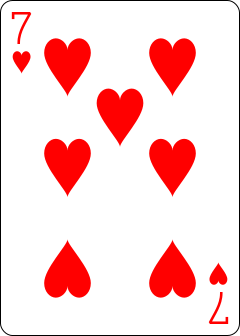
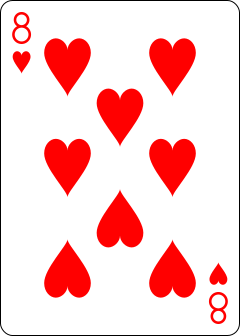
Next, slide a finger from the first value to the last, counting every intervening rank. Four, five, six, eight leaves a space where seven belongs. Removing the eight reveals a complete three-card run and a loose eight. Removing the four merely leaves five, six, eight with the original problem. Seeing a hole tells you more than noticing that most of the cards are already consecutive.
Find the pure sequence in an untidy hand
In a pure sequence every card keeps its own rank and suit. Spread 2♣, 4♥, 3♣, 4♣, 5♦ and 6♥ across the table in that order. You can bring 2♣, 3♣ and 4♣ together immediately even though they did not arrive together. Dealing order and position in a fan do not affect which melds are legal.
Leave that run in place and examine the hearts. A four and a six from one suit suggest a missing five. The nearby diamond five has the correct rank but the wrong suit. Unless fives were designated wild for this deal, that diamond cannot fill the space. The table still has one completed sequence and three leftovers.
Now take a printed joker from outside the exercise and put it between the hearts. You have demonstrated a second sequence, this time impure. Say which card the joker supplies and keep the diamond five away from it. There is no reason to discard or break the first pure run for this demonstration. In a full thirteen-card hand the two runs would satisfy the sequence portion of the declaration. Each remaining card would still need a home.
Build a set one suit at a time
A set uses one rank in distinct suits. Think of the possible positions for a set of sixes as club, diamond, heart and spade. Put 6♥, 6♦ and 6♠ in three of those positions. That gives you a valid three-card set. Bringing in 6♣ fills the last available natural suit. A second 6♦ cannot create a fifth distinct natural six.
Two matching cards can nevertheless be valuable in a two-pack hand. Suppose you hold two copies of 6♦ along with 5♦, 7♦, 6♣ and 6♥. Place one diamond six between the five and seven. The other can join the club and heart sixes to give you a set. These are two physical cards and two separate jobs. Look at the table after separating the groups and you will find all six pieces accounted for.
Take one diamond six away and you can no longer keep both arrangements. Describe the hand accurately as a completed run with a pair of sixes left over, or a set with two loose diamonds. The duplication test concerns a single set. It does not prohibit using multiple packs or holding two copies in different groups.
Work out the joker's identity
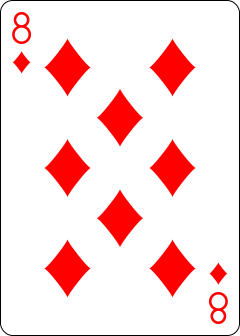
Assign each substitute one precise role before accepting a group. For 7♦, joker, 9♦, the centre card has to be 8♦. Change the arrangement to 7♦, 8♦, joker, and more than one ordering is possible. The joker may represent 9♦ at the high end or 6♦ at the low end if you rearrange the display. Both readings produce a run.
Now place 7♦, joker and 10♦ together. To connect the seven and ten you would need both eight and nine. A single joker cannot perform both jobs at once. Substituting one missing rank still leaves a broken sequence. This is a quick puzzle to share with someone who assumes a joker automatically repairs any three cards of a similar suit.
A designated wild rank works in two ways under the convention used on this page. With sevens wild, 7♠ can supply an absent queen in a heart run. But a physical 7♠ between 6♠ and 8♠ can keep its original identity. In the first case the run uses a replacement. In the second, each card sits exactly where its own markings put it, so the sequence can count as pure.
Repair a thirteen-card layout
A single swap can separate a playable hand from an invalid display. On paper, start with 3♣ 4♣ 5♣, then 8♥ 9♥ 10♦ J♥, then 10♠ 10♣ 10♥, and finally 2♦ 3♦ 4♦. There are thirteen cards and enough prospective runs. Try finding precisely what prevents a declaration in the displayed arrangement before reading the next paragraph.
The heart group contains a diamond ten. Look for a heart ten elsewhere in the hand and exchange it with the diamond ten. The hearts now read eight through jack, all in hearts. The tens are now spade, club and diamond, each a different suit. Both low runs remain untouched. The hand has become valid without drawing, discarding or labelling any card wild.
Change the puzzle by replacing 10♥ with a second 10♣ before doing the swap. You can put a ten into the gap, but it still carries the wrong suit, and the two club tens cannot stand together in an ordinary set. The exact fix relied on which ten was available. Identifying only the rank when describing a problem can hide the entire reason a proposed solution works.
Handle aces and picture cards at the ends
An ace can cap a sequence on either end under these Indian rules. With diamonds you could lay A♦ below 2♦ and 3♦, or above Q♦ and K♦. Make the choice separately for each physical ace in a multi-pack game. Once you have assigned one to a particular run, that same card cannot join another.
The high end can feel confusing because all three face cards often carry the same score when left ungrouped. Their order is still jack, queen, king. Thus 10♣ J♣ Q♣ works, as does J♣ Q♣ K♣. The order 10♣ Q♣ K♣ contains a hole, however similar the points printed in a scoring example might seem.
For an ace puzzle, fan K♥, A♥, 2♥, 3♥ and 4♥. You can make a natural four-card run starting at the ace and leave the king. You cannot make a five-card sequence by wrapping the king around to the ace and down to the two. A joker could help construct a different high-end group if there were enough cards, but it would not change the underlying order of the suits or ranks.
Divide a run without wasting its middle
You can split a long connected stretch into two sequences when both resulting parts have at least three cards. Put out the diamonds from four to nine inclusive. Taken together they form one six-card run. Separated between six and seven, they form two independent three-card runs. Both are pure. The same six physical cards can therefore serve different declaration plans.
Try separating those diamonds after the five instead. The first piece contains only four and five, so that particular split yields one legitimate run of four and a pair that remains incomplete. The original six-card row is still legal as a single sequence. Moving the divider has changed the grouping, without changing the cards or their order.
In a complete hand, decide on the split after inspecting the other seven cards. If you already have another sequence, the long row can stay intact. If the other cards make a three-card set and a four-card set, splitting the long row provides the two sequences otherwise missing. Checking the complete hand also prevents you from declaring merely because one especially impressive suit is finished.
Choose between competing claims on a card
Keep a card where it leaves the most workable groups across the hand. Put down 9♠ 10♠ J♠ Q♠ together with J♥ and J♦. A spade jack seems essential to the four-card run and at the same time would complete three jacks. Moving it from the run into the set leaves 9♠, 10♠ and Q♠, with a gap between ten and queen.
Introduce 8♠ to the same group of cards. Now move J♠ to the set again. Eight, nine and ten form their own sequence in spades, while the queen becomes the only loose card. An extra eight has changed the best use of a jack in a different combination. When a fresh draw appears unexciting next to a completed group, check whether it can release a more useful card elsewhere.
For a final variation, restore the original six cards and introduce J♣ instead. Leave the spade jack within the run and group the club, heart and diamond jacks. Every card has a home without moving the original run. This time a change of suit made the difference. A draw can help by changing which group needs a card, even when it does not visibly extend your favourite run.
Test a proposed group without guessing
Check three properties in order when a group looks doubtful. Count its cards, identify the intended kind of group, then give the rank and suit of each piece including any substitute. For a run, read those identities in uninterrupted order. For a set, compare the suits one at a time. This takes seconds with small examples and catches both duplication and gaps.
Try 9♣, a printed joker and Q♣ as a test. A player might call it a run because the two natural pieces share a suit and one wildcard is present. Reading the ranks aloud exposes two intervening cards, ten and jack. Change the queen to a jack and the joker can now fill ten. Alternatively change the nine to a ten and let the joker supply the jack before the queen.
Carry the same reasoning into the practice table. A pure-sequence exercise asks for natural consecutive ranks. A set exercise asks you to select matching values with different signs. For a joker run, decide what the missing card is before choosing the pieces. If your selection fails, return to the property you were asked to satisfy and change only the card that broke it.
Frequently asked questions
What is a pure sequence in rummy?
Every physical card in a pure run stands for itself. For instance, 2♦ 3♦ 4♦ 5♦ works without assigning a substitute to a missing diamond.
How many sequences do you need in Indian rummy?
The thirteen-card form here requires two or more separate runs and one must be pure. A legal long run can sometimes be split to meet that condition.
Is K–A–2 a sequence in rummy?
No. You may use an ace below the two or above the king in this version. Joining both ends into one wrapping group breaks the rank order.
Can we use two jokers in a set in rummy?
That depends on the table. Where two substitutions are permitted, two natural eights of different suits can be completed with two jokers, each representing a different missing eight.
What if the joker indicator is itself a printed joker?
Agree on your variant before dealing. Some rules assign the wild role to aces in this situation. Pagat documents a version where only the remaining printed joker is available.