
How rummy points work
Rummy points depend on your ungrouped cards and the rules of the format. Follow the same cards through a worked score sheet.
The order for counting a hand
Count Indian rummy points by deciding which cards are chargeable before adding their values. The order matters. An ordinary king can cost ten on its own and nothing when it belongs to a protected group. Simply totalling the faces in front of you can produce a plausible number even when half the cards should have been set aside.
Use three spaces on the table. Keep the other player’s declaration in the first space until you have checked it. In the second, put the losing hand with all thirteen cards visible. Leave the third empty for the cards that count towards the penalty. Move a card into that final space only after checking the sequence requirements. Another player can now verify which cards produced the number being written down.
The examples here use a published convention in which a pure run protects itself. A second legal run then opens the way to excluding further legal sets and runs from the penalty. A separate cap limits the recorded loss when the agreed format has one. These details are worth stating before the deal. Two families can know the same thirteen-card game yet arrive at different entries if they use different penalties or drop rules.
The value printed on the card
Cards from two through ten carry their number in points. An ordinary jack, queen, king or ace contributes ten. The designated wild rank and the printed joker contribute zero. Announce the wild rank again before adding the loose cards. It can be easy to overlook a wild number once everyone has stopped rearranging their groups.
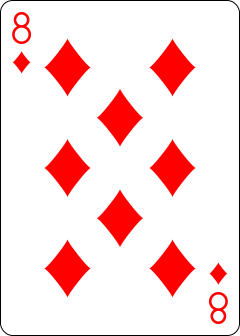
Take a chargeable pile containing the king of clubs, eight of hearts, four of diamonds, ace of spades and queen of hearts. If fives are wild, this pile totals forty-two. There are three ten-point cards and twelve more from the two numbers. Keep exactly the same five card faces but designate eights as wild. The eight stops contributing and the total becomes thirty-four. You can verify the change without touching either the king or the ace.
Card values answer a different question from the position of a card in a sequence. One example is an ace next to a two. The ace works at that end of the run because the rank order allows it. If the hand ends before the group becomes valid, a loose ordinary ace still counts ten here. The familiar one-point ace from gin can cause a nine-point error if somebody silently imports that rule into an Indian hand.
A zero-value card also needs a place in a declaration. If your twelve other cards are laid out in valid groups and a printed joker sits beside them, try assigning it to an actual open position. Until you identify a legal group for the thirteenth card, you have not completed the hand. A zero in a loss calculation and a zero for a successful declaration can therefore have quite different explanations.
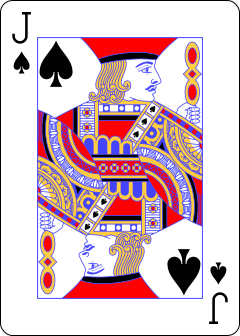
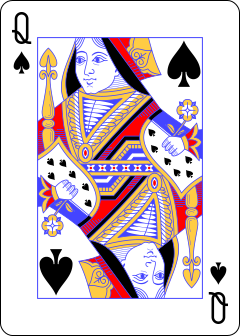
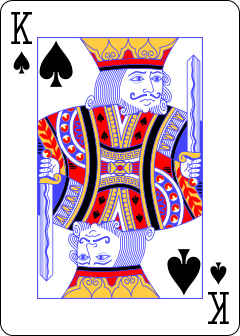
One hand before and after its second sequence
The second sequence can protect cards beyond the three that form it. Start with the four, five and six of diamonds. Put the eight and ten of clubs beside them, followed by three queens in hearts, clubs and spades. Finish the thirteen with the ace of hearts, two of spades, three of clubs, seven of hearts and king of spades. In this example jacks are wild.
Imagine an opponent declares at this moment. The three connected diamonds form the only run and are excluded. Count the other ten cards. The club eight and ten make eighteen, the queens add thirty and the five remaining cards add thirty-two. The total is eighty. The three queens are a well-formed set, but under this particular sequence rule their value still counts because the hand lacks its second sequence.
Now replay the last turn with one change. Pick up the nine of clubs and discard the king of spades. The club eight, nine and ten give the hand a second run. Both runs and the set of queens are now excluded. What remains is the ace, two, three and seven, for a penalty of twenty-two. The queen set never changed shape. Its eligibility changed when the club run became complete.
If you are using these cards to teach the score, place a slip of paper showing eighty beside the original layout. After the swap, leave the four chargeable cards visibly separated and put twenty-two next to them. Ask someone to explain the fifty-eight-point improvement. Ten came from losing the king and the rest came from protecting cards that previously counted. The solution is visible even to someone who did not see the draw.
When rearranging saves points
Rearrange overlapping groups before committing a penalty to paper. Take the two, three, four and five of hearts, the other fives in clubs and spades, the nine, ten and jack of clubs, two kings in diamonds and spades, the ace of diamonds and the seven of spades. Queens are wild. All thirteen card faces are distinct, so the exercise works with a single physical pack.
With the four hearts in a long run and the three clubs in another, the two spare fives are chargeable. So are the kings, ace and seven. You would record forty-seven using that arrangement. Move the five of hearts across to the other fives. Its former group remains a natural run of three, the second run stays intact and the three fives now make a separate set. The kings, ace and seven are the only chargeable cards, totalling thirty-seven.
The ten points saved came from protecting two additional fives. The five of hearts was already protected before the move. A scorer who subtracts fifteen from the earlier total would give it credit twice. A good count can be made from either end. Subtract the value of newly protected cards from the old result, then total the loose cards from scratch. For this layout the two methods agree on thirty-seven.
The hand cap and a drop
A cap sets the highest penalty recorded for one completed deal. At a table using an eighty-point maximum, a raw score of ninety-three becomes eighty. A raw score of seventy-nine remains seventy-nine. Keep the written raw value beside a capped entry if players are learning. Seeing “ninety-three, capped at eighty” explains the score far better than crossing out thirteen points with no explanation.
A quick test at the boundary is to score three raw totals of seventy-nine, eighty and eighty-one in neighbouring columns. Under an eighty-point cap they become seventy-nine, eighty and eighty. Only the last entry changes. The exercise prevents a common slip in which reaching the maximum exactly is treated as though it triggers a further fixed charge.
A cap also applies at a different stage from a pool limit. Someone starting a 201 pool on ninety-four could receive a capped hand score of eighty and carry one hundred and seventy-four into the next deal. Applying the cap to the new running total would erase previously earned penalties. The same numeral can appear in one column for the round and an entirely different column for the session.
A drop usually has a prescribed value in the chosen format. One points schedule assigns twenty for leaving before making the first move and forty for a later drop. Confirm the version in use, including whether dropping is available in a fixed-deal session. A player assessed twenty under an agreed drop rule does not then add the loose cards from that abandoned hand to the twenty. Mark the reason beside the figure so the hand can be checked consistently at the end of a session.
A single points deal with three players
A three-player points deal produces one declaration and an individual result for each opponent. Suppose Kavya declares, Arjun finishes on sixteen and Leela on thirty-one. The penalty record reads zero, sixteen and thirty-one. If your group instead keeps a transfer ledger with one paper counter per penalty point, Kavya receives forty-seven, Arjun gives sixteen and Leela gives thirty-one. These are two ways to record the same completed deal.
Keep the scoring convention visible in the column headings. A label such as “hand penalty” makes zero the successful result. A label such as “counters gained” makes a positive number favourable. Mixing those conventions creates a particular kind of error. A new scorer might enter forty-seven beside the winner in a penalty column and make a clean declaration look like the worst hand at the table.
When the hand has been recorded, put the score sheet aside before the next shuffle. The players can choose another independent points deal. If everyone wants a ranking across a fixed set of hands, establish that condition while the new cards are still face down. Retrospectively converting several independent deals into a match can change decisions players would have made along the way.
Keeping a 101 or 201 pool
Pool rummy records a running penalty for each player. Under the elimination convention used here, reaching the named limit ends that player’s participation. Start a 101 example with totals of fifty-eight, ninety-two and seventy-six. The first player takes twelve, the second takes nine and the third declares. The updated figures are seventy, one hundred and one, and seventy-six. The player who was on ninety-two has reached the limit exactly.
Give the same three people a 201 pool with the same figures. None has reached that higher limit. The underlying hand calculations stay intact. This makes one set of sample scores a useful way to teach both formats. You can discuss who stays in each session without dealing the cards a second time or assigning a different value to any rank.
At a busy table, read each entry as an addition aloud before marking eliminations. Saying “previous ninety-two plus this hand’s nine” allows the player to check both the source number and the new arithmetic. If someone has written a running total of one hundred beside that entry, the problem is in the addition. If they have written one hundred and one but recorded a different prior total, look back one row instead.
Balancing a fixed number of deals
A fixed-deal format begins with equal counters and ends after the agreed number of hands. Try a paper match between Meera and Dev with one hundred counters each and three deals. Meera wins the first by fourteen, putting the balances on one hundred and fourteen and eighty-six. Dev wins the next by twenty-three, leaving ninety-one for Meera and one hundred and nine for Dev.
On the final deal Meera wins by eight. Her closing balance is ninety-nine and Dev has one hundred and one. Meera won two deals out of three and Dev finishes with the larger balance. The size of the middle result accounts for the apparent surprise. You can see it also by combining the transfers. Meera gained twenty-two over her two wins and gave up twenty-three in the remaining hand.
Total the closing balances as a final check. Exactly two hundred counters entered the game and two hundred remain on the page. If you find two hundred and eight, look for a transfer entered as a gain to one player with no matching deduction from the other. If both finish level, apply the tie rule agreed before the match. Keeping the result as a draw is a simple home option when everyone has had the promised number of deals.
Frequently asked questions
How do you count points in rummy?
Set aside every group protected by the sequence rule, then total the remaining cards. Two loose eights and a king cost twenty-six. If your table caps a hand, apply that limit before updating the match score.
How many points is an ace worth in Indian rummy?
Count ten for an unmatched ordinary ace. An ace in a protected run contributes nothing to the penalty. An ace made wild by the indicator also has a zero value in this scoring convention.
How many points is a joker worth?
Zero, whether the joker is printed or its printed rank became wild for this deal. It can still be useful to place it in a group because that move may protect the natural cards beside it.
What is 101 pool rummy?
In a 101 pool you take previous penalties into the next deal. A player on ninety who adds ten stays in on one hundred. Another point reaches the elimination mark under the example rules.
How do you play deals rummy?
Choose the number of hands beforehand and allocate an equal supply of counters to every seat. After each declaration, settle the transfers. The largest closing balance wins the match even if its holder won fewer individual hands.